- Translators
- Translation Services
- Testimonials
- FAQ
- Contact Us
Italian Translator for Tanilba Bay
NAATI certified Italian translation services for Tanilba Bay, delivered usually within 24-48 hours.
NAATI Certified
24-48 Hour Delivery
Secure Payment
Get a free quote for professional Italian translation in Tanilba Bay. Complete the form for an instant quote or a response within 15 minutes.
NAATI Translators for all Locations
 Get NAATI translation services wherever you're based in Australia. All NAATI translators have up-to-date credentials with NAATI for providing certified document translations in Australia.
- Italian translator Sydney
- Italian translator Melbourne
- Brisbane translation services
- Perth translation services
- Adelaide translation services
- Canberra translation services
- Cairns translation services
- Hobart translation services
- Launceston translation services
- Darwin translation services
Get an instant quote for professional Italian translation services.
NAATI Italian Translator for Tanilba Bay
 Get fast and reliable NAATI Italian translator for your personal documents. A PDF of the certified translation is sufficient for most official purposes in Australia.
Our professional translators can also assist with marketing translation, medical translation and complex technical translations.
- Italian certificate translation Tanilba Bay
- Italian document translation Tanilba Bay
- Italian driver licence translation Tanilba Bay
- Italian marriage certificate translation
- Italian birth certificate translation
- Italian marriage certificate translation
- Italian divorce certificate translation
- Italian death certificate translation
- Italian bank statements translation
- Italian payslip or salary translation
- Italian passport translation
- Italian degree or diploma translation
- Italian academic transcript translation
- Italian police report translation
- Italian utility bill translations
- Italian wills and probate translations

Tanilba Bay Design Services
- Update Existing Brochure - Tanilba Bay
This service is particularly useful for organisations looking to refresh their brochure for the new year or promote the content in multiple languages with possible adjustments to images used. - Multilingual Namecard Translations - Tanilba Bay
Tanilba Bay Valuation Services
- Independent Website Valuation Report - Tanilba Bay
An indepedent analysis of the value of a website, to ensure fair market valuation. This service can be particularly beneficial for businesses looking to buy, sell, or assess the value of their online assets. This website valuation report can be provided in various languages. - Independent Property Valuation Report - Tanilba Bay
Comprehensive property valuation reports conducted by a professional depreciation firm. These reports help clients understand the market value of their properties for various purposes, including sales, acquisitions, and financial reporting. This report can be provided in various languages.
About Tanilba Bay

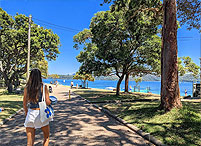
Tanilba Bay is a suburb of the Port Stephens local government area in the Hunter Region of New South Wales, Australia. It is located on the Tilligerry Peninsula adjacent to the bay from which it got its name.
The centrepiece of this small town is Tanilba House, on Caswell Crescent, which is listed on the New South Wales State Heritage Register along with The Temple of the Stork nearby. It is one of Australia's oldest buildings and the oldest in Port Stephens. In 1831 Lieut William Caswell, Royal Navy, received a land grant of 20.2 hectares (50 acres), along with an assignment of convicts who cleared the land and built Tanilba House from locally quarried quartz porphry stone and lime mortar made on the property from oyster shells. A small gaol was also built on the southern side of the house. Ten acres (4 hectares) on the eastern side of the hill was used as a vineyard soon after the house was built. An olive tree planted in the vineyard survives to this day and is heritage listed. A bunya pine, the wisteria covered pergola and two Port Jackson figs are also specifically listed.
In Tanilba Bay (State Suburbs), of people aged 15 years and over, 50.7% of people were in a registered marriage and 10.3% were in a de facto marriage.
In Tanilba Bay (State Suburbs), 28.1% of people were attending an educational institution. Of these, 32.2% were in primary school, 18.4% in secondary school and 13.1% in a tertiary or technical institution.
In Tanilba Bay (State Suburbs), 69.6% of people had both parents born in Australia and 12.7% of people had both parents born overseas.
In Tanilba Bay (State Suburbs), of people aged 15 years and over, 68.4% did unpaid domestic work in the week before the Census. During the two weeks before the Census, 25.9% provided care for children and 13.3% assisted family members or others due to a disability, long term illness or problems related to old age. In the year before the Census, 17.6% of people did voluntary work through an organisation or a group.
In Tanilba Bay (State Suburbs), 12.6% of single parents were male and 87.4% were female.
In Tanilba Bay (State Suburbs), of couple families with children, 10.1% had both partners employed full-time, 3.6% had both employed part-time and 15.2% had one employed full-time and the other part-time.
In Tanilba Bay (State Suburbs), 89.6% of private dwellings were occupied and 10.4% were unoccupied.
In Tanilba Bay (State Suburbs), of occupied private dwellings 2.4% had 1 bedroom, 10.4% had 2 bedrooms and 48.5% had 3 bedrooms. The average number of bedrooms per occupied private dwelling was 3.3. The average household size was 2.4 people.
In Tanilba Bay (State Suburbs), of all households, 70.7% were family households, 26.0% were single person households and 3.3% were group households.
In Tanilba Bay (State Suburbs), 28.9% of households had a weekly household income of less than $650 and 4.9% of households had a weekly income of more than $3000.
In Tanilba Bay (State Suburbs), 36.5% of occupied private dwellings had one registered motor vehicle garaged or parked at their address, 37.3% had two registered motor vehicles and 17.4% had three or more registered motor vehicles.
In Tanilba Bay (State Suburbs), 78.6% of households had at least one person access the internet from the dwelling. This could have been through a desktop/laptop computer, mobile or smart phone, tablet, music or video player, gaming console, smart TV or any other device.
In Tanilba Bay (State Suburbs), 41.6% of Aboriginal and/or Torres Strait Islander people were male and 58.4% were female. The median age was 21 years.
In Tanilba Bay (State Suburbs), for dwellings occupied by Aboriginal and/or Torres Strait Islander people, the average household size was 3.4 persons, with 0.9 persons per bedroom. The median household income was $1,021.
In Tanilba Bay (State Suburbs), for dwellings occupied by Aboriginal and/or Torres Strait Islander people, the median weekly rent was $320 and the median monthly mortgage repayment was $1,674.
About the Italian Language

Italian is a Romance language of the Indo-European language family. Italian is, by most measures and together with Sardinian, the closest language to Latin, from which it descends via Vulgar Latin. Italian is an official language in Italy, Switzerland (Ticino and the Grisons), San Marino, and Vatican City. It has an official minority status in western Istria (Croatia and Slovenia). It formerly had official status in Albania, Malta, Monaco, Montenegro (Kotor), Greece (Ionian Islands and Dodecanese) and is generally understood in Corsica by Corsican speakers (in facts, many linguists classify it as an Italian dialect). It also used to be an official language in the former Italian East Africa and Italian North Africa, where it still plays a significant role in various sectors. Italian is also spoken by large expatriate communities in the Americas and Australia. Italian is included under the languages covered by the European Charter for Regional or Minority languages in Bosnia and Herzegovina and in Romania, although Italian is neither a co-official nor a protected language in these countries.] Many speakers of Italian are native bilinguals of both Italian (either in its standard form or regional varieties) and other regional languages.
Italian is a major European language, being one of the official languages of the Organization for Security and Co-operation in Europe and one of the working languages of the Council of Europe. It is the second most widely spoken native language in the European Union with 67 million speakers (15% of the EU population) and it is spoken as a second language by 13.4 million EU citizens (3%). Including Italian speakers in non-EU European countries (such as Switzerland, Albania and the United Kingdom) and on other continents, the total number of speakers is approximately 85 million. Italian is the main working language of the Holy See, serving as the lingua franca (common language) in the Roman Catholic hierarchy as well as the official language of the Sovereign Military Order of Malta. Italian is known as the language of music because of its use in musical terminology and opera; numerous Italian words referring to music have become international terms taken into various languages worldwide. Its influence is also widespread in the arts and in the food and luxury goods markets.