- Translators
- Translation Services
- Testimonials
- FAQ
- Contact Us
Indonesian Translator for Bass Hill
NAATI certified Indonesian translation services for Bass Hill, delivered usually within 24-48 hours.
NAATI Certified
24-48 Hour Delivery
Secure Payment
Get a free quote for professional Indonesian translation in Bass Hill. Complete the form for an instant quote or a response within 15 minutes.
NAATI Translators for all Locations
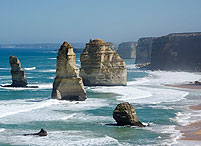 Get NAATI translation services wherever you're based in Australia. All NAATI translators have up-to-date credentials with NAATI for providing certified document translations in Australia.
- Indonesian translator Sydney
- Indonesian translator Melbourne
- Brisbane translation services
- Perth translation services
- Adelaide translation services
- Canberra translation services
- Cairns translation services
- Hobart translation services
- Launceston translation services
- Darwin translation services
NAATI Indonesian Translator for Bass Hill
 Get fast and reliable NAATI Indonesian translator for your personal documents. A PDF of the certified translation is sufficient for most official purposes in Australia.
Our professional translators can also assist with marketing translation, medical translation and complex technical translations.
- Indonesian certificate translation Bass Hill
- Indonesian document translation Bass Hill
- Indonesian driver licence translation Bass Hill
- Indonesian marriage certificate translation
- Indonesian birth certificate translation
- Indonesian marriage certificate translation
- Indonesian divorce certificate translation
- Indonesian death certificate translation
- Indonesian bank statements translation
- Indonesian payslip or salary translation
- Indonesian passport translation
- Indonesian degree or diploma translation
- Indonesian academic transcript translation
- Indonesian police report translation
- Indonesian utility bill translations
- Indonesian wills and probate translations

Bass Hill Design Services
- Update Existing Brochure - Bass Hill
This service is particularly useful for organisations looking to refresh their brochure for the new year or promote the content in multiple languages with possible adjustments to images used. - Multilingual Namecard Translations - Bass Hill
Bass Hill Valuation Services
- Independent Website Valuation Report - Bass Hill
An indepedent analysis of the value of a website, to ensure fair market valuation. This service can be particularly beneficial for businesses looking to buy, sell, or assess the value of their online assets. This website valuation report can be provided in various languages. - Independent Property Valuation Report - Bass Hill
Comprehensive property valuation reports conducted by a professional depreciation firm. These reports help clients understand the market value of their properties for various purposes, including sales, acquisitions, and financial reporting. This report can be provided in various languages.
About Bass Hill
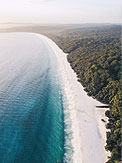
Bass Hill is a suburb of local government area City of Canterbury-Bankstown, is located 23 kilometres south-west of the Sydney central business district, in the state of New South Wales, Australia, and is a part of the South-western Sydney region.
Bass Hill is named after George Bass, a surgeon and explorer who was granted land here in 1798. He had arrived in the colony in 1795 on HMS Reliance and became friendly with midshipman Matthew Flinders and on arrival they decided to explore parts of the colony. In 1796 on a small boat called the Tom Thumb accompanied by a boy servant William Martin, they sailed into Botany Bay and explored the Georges River, twenty miles (32 km) beyond previous expeditions. They sailed as far as present day Georges Hall. For their exploration efforts Bass and Flinders were rewarded with 100-acre (0.40 km2) land grants in this area by Governor Hunter.[2]
The area developed rapidly after the completion of Liverpool Road in 1814. Originally known as Irish Town because of the Irish settlements, it later became known as Upper Bankstown. It became officially known as Bass Hill in October 1924.
During World War II, Bass Hill was the location for a small transmitting station that was owned and operated by the RAAF. It was located on the corner of Manuka Crescent & Johnston Road. This facility worked in conjunction with the Bankstown Bunker on Black Charlies Hill in Condell Park, which also worked in conjunction with a remote receiving station that was located in Picnic Point.
In Bass Hill (State Suburbs), of people aged 15 years and over, 48.3% of people were in a registered marriage and 4.7% were in a de facto marriage.
In Bass Hill (State Suburbs), 32.4% of people were attending an educational institution. Of these, 30.3% were in primary school, 24.6% in secondary school and 18.9% in a tertiary or technical institution.
In Bass Hill (State Suburbs), 20.4% of people had both parents born in Australia and 61.5% of people had both parents born overseas.
In Bass Hill (State Suburbs), of people aged 15 years and over, 57.2% did unpaid domestic work in the week before the Census. During the two weeks before the Census, 25.5% provided care for children and 13.5% assisted family members or others due to a disability, long term illness or problems related to old age. In the year before the Census, 10.1% of people did voluntary work through an organisation or a group.
In Bass Hill (State Suburbs), 15.1% of single parents were male and 84.9% were female.
In Bass Hill (State Suburbs), of couple families with children, 16.1% had both partners employed full-time, 2.8% had both employed part-time and 14.1% had one employed full-time and the other part-time.
In Bass Hill (State Suburbs), 91.9% of private dwellings were occupied and 8.1% were unoccupied.
In Bass Hill (State Suburbs), of occupied private dwellings 4.5% had 1 bedroom, 11.7% had 2 bedrooms and 43.0% had 3 bedrooms. The average number of bedrooms per occupied private dwelling was 3.2. The average household size was 3.2 people.
In Bass Hill (State Suburbs), of all households, 78.1% were family households, 19.7% were single person households and 2.2% were group households.
In Bass Hill (State Suburbs), 24.9% of households had a weekly household income of less than $650 and 12.2% of households had a weekly income of more than $3000.
In Bass Hill (State Suburbs), 30.9% of occupied private dwellings had one registered motor vehicle garaged or parked at their address, 33.8% had two registered motor vehicles and 22.5% had three or more registered motor vehicles.
In Bass Hill (State Suburbs), 78.4% of households had at least one person access the internet from the dwelling. This could have been through a desktop/laptop computer, mobile or smart phone, tablet, music or video player, gaming console, smart TV or any other device.
In Bass Hill (State Suburbs), 48.5% of Aboriginal and/or Torres Strait Islander people were male and 51.5% were female. The median age was 25 years.
In Bass Hill (State Suburbs), for dwellings occupied by Aboriginal and/or Torres Strait Islander people, the average household size was 3.5 persons, with 1.1 persons per bedroom. The median household income was $1,156.
In Bass Hill (State Suburbs), for dwellings occupied by Aboriginal and/or Torres Strait Islander people, the median weekly rent was $371 and the median monthly mortgage repayment was $2,500.
About the Indonesian Language

Indonesian is the official language of Indonesia. It is a standardized variety of Malay, an Austronesian language that has been used as a lingua franca in the multilingual Indonesian archipelago for centuries. Indonesia is the fourth most populous nation in the world-of which the majority speak Indonesian, which makes it one of the most widely spoken languages in the world. Most Indonesians, aside from speaking the national language, are fluent in at least one of the more than 700 indigenous local languages; examples include Javanese, Sundanese, and Balinese, which are commonly used at home and within the local community. However, most formal education and nearly all national mass media, governance, administration, and judiciary and other forms of communication are conducted in Indonesian.
The term "Indonesian" is primarily associated with the national standard dialect (bahasa baku). However, in a more loose sense, it also encompasses the various local varieties spoken throughout the Indonesian archipelago. Standard Indonesian is confined mostly to formal situations, existing in a diglossic relationship with vernacular Malay varieties, which are commonly used for daily communication.
The Indonesian name for the language (bahasa Indonesia) is also occasionally found in English and other languages.