- Translators
- Translation Services
- Testimonials
- FAQ
- Contact Us
Finnish Translator for Ebor
NAATI certified Finnish translation services for Ebor, delivered usually within 24-48 hours.
NAATI Certified
24-48 Hour Delivery
Secure Payment
Get a free quote for professional Finnish translation in Ebor. Complete the form for an instant quote or a response within 15 minutes.
NAATI Translators for all Locations
 Get NAATI translation services wherever you're based in Australia. All NAATI translators have up-to-date credentials with NAATI for providing certified document translations in Australia.
- Finnish translator Sydney
- Finnish translator Melbourne
- Brisbane translation services
- Perth translation services
- Adelaide translation services
- Canberra translation services
- Cairns translation services
- Hobart translation services
- Launceston translation services
- Darwin translation services
NAATI Finnish Translator for Ebor
 Get fast and reliable NAATI Finnish translator for your personal documents. A PDF of the certified translation is sufficient for most official purposes in Australia.
Our professional translators can also assist with marketing translation, medical translation and complex technical translations.
- Finnish certificate translation Ebor
- Finnish document translation Ebor
- Finnish driver licence translation Ebor
- Finnish marriage certificate translation
- Finnish birth certificate translation
- Finnish marriage certificate translation
- Finnish divorce certificate translation
- Finnish death certificate translation
- Finnish bank statements translation
- Finnish payslip or salary translation
- Finnish passport translation
- Finnish degree or diploma translation
- Finnish academic transcript translation
- Finnish police report translation
- Finnish utility bill translations
- Finnish wills and probate translations
Ebor Design Services
- Update Existing Brochure - Ebor
This service is particularly useful for organisations looking to refresh their brochure for the new year or promote the content in multiple languages with possible adjustments to images used. - Multilingual Namecard Translations - Ebor

Ebor Valuation Services
- Independent Website Valuation Report - Ebor
An indepedent analysis of the value of a website, to ensure fair market valuation. This service can be particularly beneficial for businesses looking to buy, sell, or assess the value of their online assets. This website valuation report can be provided in various languages. - Independent Property Valuation Report - Ebor
Comprehensive property valuation reports conducted by a professional depreciation firm. These reports help clients understand the market value of their properties for various purposes, including sales, acquisitions, and financial reporting. This report can be provided in various languages.
About Ebor
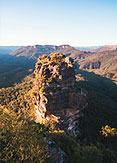
Ebor is a village on Waterfall Way on the Northern Tablelands in New South Wales, Australia. It is situated about 80 km (50 mi) east of Armidale and about a third of the way between Armidale and the coast. Dorrigo to the east is 46 kilometres (29 mi) away with the Coffs Coast 55 kilometres (34 mi) away along Waterfall Way. In the 2016 census, Ebor's zone had a population of 166.
Although "The Heart of Waterfall Way", Ebor is on the eastern edge of Armidale Regional Council, and close to the border of Clarence Valley Council and Bellingen Shire Council. Until the amalgamation of Guyra and Armidale councils, one side of Ebor was under Armidale council, and the other under Guyra shire. Likewise, Ebor is close to 3 state (Northern Tablelands, Oxley and Clarence) and 3 federal electoral boundaries (New England, Cowper and Page).
Due to its central position on Waterfall Way, Ebor offers easy access for residents and tourists to Guy Fawkes River National Park, Cathedral Rock National Park, Cunnawarra National Park, New England National Park, part of Oxley Wild Rivers National Park, Nymboi-Binderay National Park and Mount Hyland Nature Reserve.The natural environment of the surrounding district includes some areas which have been cleared for pastoralism and forestry. Nonetheless, the national parks around Ebor have been described as a bush walking "Mecca".The main tourist attraction is the twin Ebor Falls.
In Ebor (State Suburbs), of people aged 15 years and over, 42.1% of people were in a registered marriage and 18.3% were in a de facto marriage.
In Ebor (State Suburbs), 26.1% of people were attending an educational institution. Of these, 35.0% were in primary school, 17.5% in secondary school and 7.5% in a tertiary or technical institution.
In Ebor (State Suburbs), 75.3% of people had both parents born in Australia and 5.6% of people had both parents born overseas.
In Ebor (State Suburbs), of people aged 15 years and over, 76.6% did unpaid domestic work in the week before the Census. During the two weeks before the Census, 23.0% provided care for children and 12.6% assisted family members or others due to a disability, long term illness or problems related to old age. In the year before the Census, 28.6% of people did voluntary work through an organisation or a group.
In Ebor (State Suburbs), 0.0% of single parents were male and 100.0% were female.
In Ebor (State Suburbs), of couple families with children, 21.1% had both partners employed full-time, 0.0% had both employed part-time and 34.2% had one employed full-time and the other part-time.
In Ebor (State Suburbs), 70.7% of private dwellings were occupied and 29.3% were unoccupied.
In Ebor (State Suburbs), of occupied private dwellings 7.8% had 1 bedroom, 29.7% had 2 bedrooms and 29.7% had 3 bedrooms. The average number of bedrooms per occupied private dwelling was 2.8. The average household size was 2 people.
In Ebor (State Suburbs), of all households, 61.8% were family households, 38.2% were single person households and 0.0% were group households.
In Ebor (State Suburbs), 36.1% of households had a weekly household income of less than $650 and 0.0% of households had a weekly income of more than $3000.
In Ebor (State Suburbs), 37.0% of occupied private dwellings had one registered motor vehicle garaged or parked at their address, 26.0% had two registered motor vehicles and 30.1% had three or more registered motor vehicles.
In Ebor (State Suburbs), 71.0% of households had at least one person access the internet from the dwelling. This could have been through a desktop/laptop computer, mobile or smart phone, tablet, music or video player, gaming console, smart TV or any other device.
In Ebor (State Suburbs), 100.0% of Aboriginal and/or Torres Strait Islander people were male and 0.0% were female. The median age was 43 years.
In Ebor (State Suburbs), for dwellings occupied by Aboriginal and/or Torres Strait Islander people, the average household size was 0 persons, with 0 persons per bedroom. The median household income was $0.
In Ebor (State Suburbs), for dwellings occupied by Aboriginal and/or Torres Strait Islander people, the median weekly rent was $0 and the median monthly mortgage repayment was $0.
About the Finnish Language

Finnish is a Uralic language of the Finnic branch spoken by the majority of the population in Finland and by ethnic Finns outside Finland. Finnish is one of the two official languages of Finland (the other being Swedish). In Sweden, both Finnish and Meänkieli (which has significant mutual intelligibility with Finnish) are official minority languages. The Kven language, which like Meänkieli is mutually intelligible with Finnish, is spoken in the Norwegian county Troms og Finnmark by a minority group of Finnish descent.
Finnish is typologically agglutinative and uses almost exclusively suffixal affixation. Nouns, adjectives, pronouns, numerals and verbs are inflected depending on their role in the sentence. Sentences are normally formed with subject-verb-object word order, although the extensive use of inflection allows them to be ordered otherwise. Word order variations are often reserved for differences in information structure. The orthography is a Latin-script alphabet derived from the Swedish alphabet, and for the most part each grapheme corresponds to a single phoneme and vice versa. Vowel length and consonant length are distinguished, and there are a range of diphthongs, although vowel harmony limits which diphthongs are possible.