- Translators
- Translation Services
- Testimonials
- FAQ
- Contact Us
Farsi Translator for Glebe (NSW)
NAATI certified Farsi translation services for Glebe (NSW), delivered usually within 24-48 hours.
NAATI Certified
24-48 Hour Delivery
Secure Payment
Get a free quote for professional Farsi translation in Glebe (NSW). Complete the form for an instant quote or a response within 15 minutes.
NAATI Translators for all Locations
 Get NAATI translation services wherever you're based in Australia. All NAATI translators have up-to-date credentials with NAATI for providing certified document translations in Australia.
- Farsi translator Sydney
- Farsi translator Melbourne
- Brisbane translation services
- Perth translation services
- Adelaide translation services
- Canberra translation services
- Cairns translation services
- Hobart translation services
- Launceston translation services
- Darwin translation services
NAATI Farsi Translator for Glebe (NSW)
 Get fast and reliable NAATI Farsi translator for your personal documents. A PDF of the certified translation is sufficient for most official purposes in Australia.
Our professional translators can also assist with marketing translation, medical translation and complex technical translations.
- Farsi certificate translation Glebe (NSW)
- Farsi document translation Glebe (NSW)
- Farsi driver licence translation Glebe (NSW)
- Farsi marriage certificate translation
- Farsi birth certificate translation
- Farsi marriage certificate translation
- Farsi divorce certificate translation
- Farsi death certificate translation
- Farsi bank statements translation
- Farsi payslip or salary translation
- Farsi passport translation
- Farsi degree or diploma translation
- Farsi academic transcript translation
- Farsi police report translation
- Farsi utility bill translations
- Farsi wills and probate translations
Glebe (NSW) Design Services
- Update Existing Brochure - Glebe (NSW)
This service is particularly useful for organisations looking to refresh their brochure for the new year or promote the content in multiple languages with possible adjustments to images used. - Multilingual Namecard Translations - Glebe (NSW)
Glebe (NSW) Valuation Services
- Independent Website Valuation Report - Glebe (NSW)
An indepedent analysis of the value of a website, to ensure fair market valuation. This service can be particularly beneficial for businesses looking to buy, sell, or assess the value of their online assets. This website valuation report can be provided in various languages. - Independent Property Valuation Report - Glebe (NSW)
Comprehensive property valuation reports conducted by a professional depreciation firm. These reports help clients understand the market value of their properties for various purposes, including sales, acquisitions, and financial reporting. This report can be provided in various languages.
About Glebe (NSW)
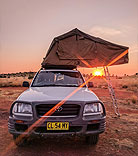
Glebe is an inner-western suburb of Sydney. Glebe is located 3 kilometres (1.9 mi) southwest of the Sydney central business district and is part of the local government area of the City of Sydney, in the Inner West region. Glebe is surrounded by Blackwattle Bay and Rozelle Bay, inlets of Sydney Harbour, in the north. The suburb of Ultimo lies to the east and the suburbs of Annandale and Forest Lodge lie to the west. The southern boundary is formed by Parramatta Road and Broadway. Broadway is a locality sited along the road of the same name, which is located on the border of Glebe, Chippendale and Ultimo.
Glebe's name is derived from the fact that the land on which it was developed was a glebe, originally owned by the Anglican Church. 'The Glebe' was a land grant of 162 hectares (400 acres) given by Governor Arthur Phillip to Reverend Richard Johnson, Chaplain of the First Fleet, in 1790.
In the 19th century, Glebe was home to architect, Edmund Blacket, who had migrated from England. Blacket built his family home, Bidura, on Glebe Point Road in 1858, designing it along conventional Victorian Regency lines. He also designed St John's Church, on the corner of Glebe Point Road and St Johns Road. The church was built from 1868 to 1870.
The suburb of Glebe was home to a first grade football team in the New South Wales Rugby League, now the National Rugby League. The Glebe Dirty Reds were formed in 1908 and played in the first seasons of rugby league in Australia, with home games at Wentworth Park.[4] The foundation club did not win a premiership, and was excluded from the competition in 1930.
In Glebe (NSW) (State Suburbs), of people aged 15 years and over, 27.5% of people were in a registered marriage and 15.3% were in a de facto marriage.
In Glebe (NSW) (State Suburbs), 34.8% of people were attending an educational institution. Of these, 10.4% were in primary school, 10.0% in secondary school and 40.0% in a tertiary or technical institution.
In Glebe (NSW) (State Suburbs), 35.5% of people had both parents born in Australia and 40.7% of people had both parents born overseas.
In Glebe (NSW) (State Suburbs), of people aged 15 years and over, 67.7% did unpaid domestic work in the week before the Census. During the two weeks before the Census, 14.9% provided care for children and 9.8% assisted family members or others due to a disability, long term illness or problems related to old age. In the year before the Census, 21.4% of people did voluntary work through an organisation or a group.
In Glebe (NSW) (State Suburbs), 12.6% of single parents were male and 87.4% were female.
In Glebe (NSW) (State Suburbs), of couple families with children, 31.1% had both partners employed full-time, 4.5% had both employed part-time and 18.6% had one employed full-time and the other part-time.
In Glebe (NSW) (State Suburbs), 89.9% of private dwellings were occupied and 10.1% were unoccupied.
In Glebe (NSW) (State Suburbs), of occupied private dwellings 22.8% had 1 bedroom, 32.5% had 2 bedrooms and 23.6% had 3 bedrooms. The average number of bedrooms per occupied private dwelling was 2.2. The average household size was 2.1 people.
In Glebe (NSW) (State Suburbs), of all households, 49.3% were family households, 38.6% were single person households and 12.1% were group households.
In Glebe (NSW) (State Suburbs), 24.9% of households had a weekly household income of less than $650 and 25.5% of households had a weekly income of more than $3000.
In Glebe (NSW) (State Suburbs), 44.4% of occupied private dwellings had one registered motor vehicle garaged or parked at their address, 15.3% had two registered motor vehicles and 3.4% had three or more registered motor vehicles.
In Glebe (NSW) (State Suburbs), 81.8% of households had at least one person access the internet from the dwelling. This could have been through a desktop/laptop computer, mobile or smart phone, tablet, music or video player, gaming console, smart TV or any other device.
In Glebe (NSW) (State Suburbs), 41.8% of Aboriginal and/or Torres Strait Islander people were male and 58.2% were female. The median age was 29 years.
In Glebe (NSW) (State Suburbs), for dwellings occupied by Aboriginal and/or Torres Strait Islander people, the average household size was 2.3 persons, with 1 persons per bedroom. The median household income was $807.
In Glebe (NSW) (State Suburbs), for dwellings occupied by Aboriginal and/or Torres Strait Islander people, the median weekly rent was $192 and the median monthly mortgage repayment was $2,492.
About the Farsi Language
Farsi is a Western Iranian language belonging to the Iranian branch of the Indo-Iranian subdivision of the Indo-European languages. Persian is a pluricentric language predominantly spoken and used officially within Iran, Afghanistan and Tajikistan in three mutually intelligible standard varieties, namely Iranian Persian, Dari Persian (officially named Dari since 1958) and Tajiki Persian (officially named Tajik since the Soviet era). It is also spoken natively in the Tajik variety by a significant population within Uzbekistan, as well as within other regions with a Persianate history in the cultural sphere of Greater Iran. It is written officially within Iran and Afghanistan in the Persian alphabet, a derivation of the Arabic script, and within Tajikistan in the Tajik alphabet, a derivation of Cyrillic.
Modern Persian is a continuation of Middle Persian, an official language of the Sasanian Empire (224–651 CE), itself a continuation of Old Persian, which was used in the Achaemenid Empire (550–330 BC). It originated in the region of Fars (Persia) in southwestern Iran. Its grammar is similar to that of many European languages.
Persian was the first language to break through the monopoly of Arabic on writing in the Muslim world, with Persian poetry becoming a tradition in many eastern courts. It was used officially as a language of bureaucracy even by non-native speakers, such as the Ottomans in Asia Minor, the Mughals in South Asia, and the Pashtuns in Afghanistan. It influenced languages spoken in neighboring regions and beyond, including other Iranian languages, the Turkic languages, Armenian, Georgian, and the Indo-Aryan languages. It also exerted some influence on Arabic, while borrowing a lot of vocabulary from it in the Middle Ages. There are approximately 110 million Persian speakers worldwide, including Persians, Tajiks, Hazaras, Caucasian Tats and Aimaqs. The term Persophone might also be used to refer to a speaker of Persian.