- Translators
- Translation Services
- Testimonials
- FAQ
- Contact Us
Dutch Translator for Avalon Beach
NAATI certified Dutch translation services for Avalon Beach, delivered usually within 24-48 hours.
NAATI Certified
24-48 Hour Delivery
Secure Payment
Get a free quote for professional Dutch translation in Avalon Beach. Complete the form for an instant quote or a response within 15 minutes.
NAATI Translators for all Locations
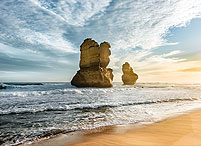 Get NAATI translation services wherever you're based in Australia. All NAATI translators have up-to-date credentials with NAATI for providing certified document translations in Australia.
- Dutch translator Sydney
- Dutch translator Melbourne
- Brisbane translation services
- Perth translation services
- Adelaide translation services
- Canberra translation services
- Cairns translation services
- Hobart translation services
- Launceston translation services
- Darwin translation services
NAATI Dutch Translator for Avalon Beach
 Get fast and reliable NAATI Dutch translator for your personal documents. A PDF of the certified translation is sufficient for most official purposes in Australia.
Our professional translators can also assist with marketing translation, medical translation and complex technical translations.
- Dutch certificate translation Avalon Beach
- Dutch document translation Avalon Beach
- Dutch driver licence translation Avalon Beach
- Dutch marriage certificate translation
- Dutch birth certificate translation
- Dutch marriage certificate translation
- Dutch divorce certificate translation
- Dutch death certificate translation
- Dutch bank statements translation
- Dutch payslip or salary translation
- Dutch passport translation
- Dutch degree or diploma translation
- Dutch academic transcript translation
- Dutch police report translation
- Dutch utility bill translations
- Dutch wills and probate translations
Avalon Beach Design Services
- Update Existing Brochure - Avalon Beach
This service is particularly useful for organisations looking to refresh their brochure for the new year or promote the content in multiple languages with possible adjustments to images used. - Multilingual Namecard Translations - Avalon Beach

Avalon Beach Valuation Services
- Independent Website Valuation Report - Avalon Beach
An indepedent analysis of the value of a website, to ensure fair market valuation. This service can be particularly beneficial for businesses looking to buy, sell, or assess the value of their online assets. This website valuation report can be provided in various languages. - Independent Property Valuation Report - Avalon Beach
Comprehensive property valuation reports conducted by a professional depreciation firm. These reports help clients understand the market value of their properties for various purposes, including sales, acquisitions, and financial reporting. This report can be provided in various languages.
About Avalon Beach
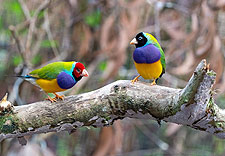
Avalon Beach is a northern beachside suburb of Sydney, in the state of New South Wales, Australia. It is 37 kilometres north of the Sydney central business district, in the local government area of Northern Beaches Council, in the Northern Beaches region. The area was previously called Avalon, with the name Avalon Beach being assigned during a change in boundaries and names in the Pittwater region in 2012.
Avalon was named after the mythical Avalon, a legendary island in Celtic languages mythology. According to legends, Avalon was an earthly paradise and the final resting place of King Arthur.The first land grant in the area was 240,000 square metres (60 acres) to John Farrell in 1827. In 1833 a 4.9-square-kilometre (1,200-acre) land grant was made to Australia's first Catholic priest, John Joseph Therry, by Governor Bourke. A further grant of 280 acres made in 1837 meant that Therry's holdings covered most of the peninsula from Newport to Whale Beach. He built a church in this area but his plans for a settlement never eventuated. Therry fought hard for the recognition of the Catholic Church in the colony. After he died, the land was left to the Jesuit order and was then sold to help finance the rebuilding of St. Mary's Cathedral in Sydney.
In the 1920s, the area was still known as 'Priest's Flat'. Arthur J Small handled a subdivision in 1921 and chose the name Avalon. Lots were sold for £100 each and included two year's free membership in the local golf club. Significant housing developments took place during the 1920s.
In Avalon Beach (State Suburbs), of people aged 15 years and over, 54.6% of people were in a registered marriage and 9.7% were in a de facto marriage.
In Avalon Beach (State Suburbs), 30.6% of people were attending an educational institution. Of these, 30.5% were in primary school, 27.5% in secondary school and 17.0% in a tertiary or technical institution.
In Avalon Beach (State Suburbs), 50.8% of people had both parents born in Australia and 26.0% of people had both parents born overseas.
In Avalon Beach (State Suburbs), of people aged 15 years and over, 79.0% did unpaid domestic work in the week before the Census. During the two weeks before the Census, 33.4% provided care for children and 11.6% assisted family members or others due to a disability, long term illness or problems related to old age. In the year before the Census, 23.8% of people did voluntary work through an organisation or a group.
In Avalon Beach (State Suburbs), 19.5% of single parents were male and 80.5% were female.
In Avalon Beach (State Suburbs), of couple families with children, 19.2% had both partners employed full-time, 6.3% had both employed part-time and 28.0% had one employed full-time and the other part-time.
In Avalon Beach (State Suburbs), 88.7% of private dwellings were occupied and 11.3% were unoccupied.
In Avalon Beach (State Suburbs), of occupied private dwellings 3.7% had 1 bedroom, 15.0% had 2 bedrooms and 35.6% had 3 bedrooms. The average number of bedrooms per occupied private dwelling was 3.3. The average household size was 2.8 people.
In Avalon Beach (State Suburbs), of all households, 79.1% were family households, 19.2% were single person households and 1.7% were group households.
In Avalon Beach (State Suburbs), 11.7% of households had a weekly household income of less than $650 and 33.6% of households had a weekly income of more than $3000.
In Avalon Beach (State Suburbs), 27.2% of occupied private dwellings had one registered motor vehicle garaged or parked at their address, 44.7% had two registered motor vehicles and 22.8% had three or more registered motor vehicles.
In Avalon Beach (State Suburbs), 92.1% of households had at least one person access the internet from the dwelling. This could have been through a desktop/laptop computer, mobile or smart phone, tablet, music or video player, gaming console, smart TV or any other device.
In Avalon Beach (State Suburbs), 47.1% of Aboriginal and/or Torres Strait Islander people were male and 52.9% were female. The median age was 25 years.
In Avalon Beach (State Suburbs), for dwellings occupied by Aboriginal and/or Torres Strait Islander people, the average household size was 2.8 persons, with 1 persons per bedroom. The median household income was $1,625.
In Avalon Beach (State Suburbs), for dwellings occupied by Aboriginal and/or Torres Strait Islander people, the median weekly rent was $565 and the median monthly mortgage repayment was $2,127.
About the Dutch Language
Dutch is a West Germanic language spoken by about 24 million people as a first language and 5 million people as a second language, constituting the majority of people in the Netherlands (where it is the only official language countrywide) and Belgium (as one of three official languages). It is the third most widely spoken Germanic language, after its close relatives English and German.
Outside the Low Countries, it is the native language of the majority of the population of Suriname where it also holds an official status, as it does in Aruba, Curacao and Sint Maarten, which are constituent countries of the Kingdom of the Netherlands and are located in the Caribbean. Historical linguistic minorities on the verge of extinction remain in parts of France and Germany, and in Indonesia, while up to half a million native speakers may reside in the United States, Canada and Australia combined. The Cape Dutch dialects of Southern Africa have evolved into Afrikaans, a mutually intelligible daughter language[n 3] which is spoken to some degree by at least 16 million people, mainly in South Africa and Namibia.
Dutch is one of the closest relatives of both German and English and is colloquially said to be "roughly in between" them. Dutch, like English, has not undergone the High German consonant shift, does not use Germanic umlaut as a grammatical marker, has largely abandoned the use of the subjunctive, and has levelled much of its morphology, including most of its case system. Features shared with German include the survival of two to three grammatical genders-albeit with few grammatical consequences-as well as the use of modal particles, final-obstruent devoicing, and a similar word order. Dutch vocabulary is mostly Germanic and incorporates slightly more Romance loans than German but far fewer than English. As with German, the vocabulary of Dutch also has strong similarities with the continental Scandinavian languages, but is not mutually intelligible in text or speech with any of them.