- Translators
- Translation Services
- Testimonials
- FAQ
- Contact Us
Danish Translator for Hoxton Park
NAATI certified Danish translation services for Hoxton Park, delivered usually within 24-48 hours.
NAATI Certified
24-48 Hour Delivery
Secure Payment
Get a free quote for professional Danish translation in Hoxton Park. Complete the form for an instant quote or a response within 15 minutes.
NAATI Translators for all Locations
 Get NAATI translation services wherever you're based in Australia. All NAATI translators have up-to-date credentials with NAATI for providing certified document translations in Australia.
- Danish translator Sydney
- Danish translator Melbourne
- Brisbane translation services
- Perth translation services
- Adelaide translation services
- Canberra translation services
- Cairns translation services
- Hobart translation services
- Launceston translation services
- Darwin translation services
NAATI Danish Translator for Hoxton Park
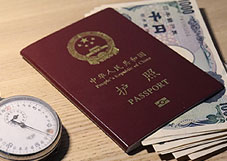 Get fast and reliable NAATI Danish translator for your personal documents. A PDF of the certified translation is sufficient for most official purposes in Australia.
Our professional translators can also assist with marketing translation, medical translation and complex technical translations.
- Danish certificate translation Hoxton Park
- Danish document translation Hoxton Park
- Danish driver licence translation Hoxton Park
- Danish marriage certificate translation
- Danish birth certificate translation
- Danish marriage certificate translation
- Danish divorce certificate translation
- Danish death certificate translation
- Danish bank statements translation
- Danish payslip or salary translation
- Danish passport translation
- Danish degree or diploma translation
- Danish academic transcript translation
- Danish police report translation
- Danish utility bill translations
- Danish wills and probate translations
Hoxton Park Design Services
- Update Existing Brochure - Hoxton Park
This service is particularly useful for organisations looking to refresh their brochure for the new year or promote the content in multiple languages with possible adjustments to images used. - Multilingual Namecard Translations - Hoxton Park
Hoxton Park Valuation Services
- Independent Website Valuation Report - Hoxton Park
An indepedent analysis of the value of a website, to ensure fair market valuation. This service can be particularly beneficial for businesses looking to buy, sell, or assess the value of their online assets. This website valuation report can be provided in various languages. - Independent Property Valuation Report - Hoxton Park
Comprehensive property valuation reports conducted by a professional depreciation firm. These reports help clients understand the market value of their properties for various purposes, including sales, acquisitions, and financial reporting. This report can be provided in various languages.
About Hoxton Park

Hoxton Park is a suburb of Sydney, in the state of New South Wales, Australia. Hoxton Park is located 38 kilometres west of the Sydney central business district, in the local government area of the City of Liverpool and is part of the Greater Western Sydney region. Hoxton Park also had a small sealed airstrip, Hoxton Park Airport which was used for general aviation and training until its closure and destruction in 2008.
Hoxton Park was named in 1887 when Phillips and Co. syndicates, subdivided the land under that name. Thomas Setrop Amos, a London solicitor, who arrived in Sydney in 1816, was granted 800 acres here in June 1818.
A further development of note took place circa 1857 with the construction of Bernera, a weatherboard homestead built by Allan Macpherson, son of a former Collector of Internal Revenue, William Macpherson. Bernera was an early homestead in a vernacular style and is listed on the Register of the National Estate.
Hoxton Park is a suburb of Sydney, in the state of New South Wales, Australia. Hoxton Park is located 38 kilometres west of the Sydney central business district, in the local government area of the City of Liverpool and is part of the Greater Western Sydney region. Hoxton Park also had a small sealed airstrip, Hoxton Park Airport which was used for general aviation and training until its closure and destruction in 2008.
Hoxton Park was named in 1887 when Phillips and Co. syndicates, subdivided the land under that name. Thomas Setrop Amos, a London solicitor, who arrived in Sydney in 1816, was granted 800 acres (3.2 km2) here in June 1818.
A further development of note took place circa 1857 with the construction of Bernera, a weatherboard homestead built by Allan Macpherson, son of a former Collector of Internal Revenue, William Macpherson. Bernera was an early homestead in a vernacular style and is listed on the Register of the National Estate. In 2016, there were 4,355 residents in Hoxton Park. The median age of people in Hoxton Park was 32 years. Children aged 0 - 14 years made up 24.4% of the population and people aged 65 years and over made up 6.8% of the population. 50.9% of people were born in Australia. The most common countries of birth were Fiji 7.2%, Iraq 6.6%, Philippines 2.8%, Vietnam 2.8% and New Zealand 2.3%. 37.4% of people only spoke English at home. Other languages spoken at home included Arabic 9.1%, Hindi 8.5%, Assyrian Neo-Aramaic 4.0%, Vietnamese 3.8% and Spanish 3.4%. The most common responses for religion in Hoxton were Catholic 33.0%, Islam 9.6%, No Religion 9.3% and Buddhism 7.8%.
About the Danish Language
Danish is a North Germanic language spoken by about six million people, principally in Denmark, Greenland and in the region of Southern Schleswig in northern Germany, where it has minority language status.Also, minor Danish-speaking communities are found in Norway, Sweden, Spain, the United States, Canada, Brazil, and Argentina. Due to immigration and language shift in urban areas, about 15-20% of the population of Greenland speak Danish as their first language.
Along with the other North Germanic languages, Danish is a descendant of Old Norse, the common language of the Germanic peoples who lived in Scandinavia during the Viking Era. A more recent classification based on mutual intelligibility separates modern spoken Danish, Norwegian, and Swedish as "mainland Scandinavian", while Icelandic and Faroese are classified as "insular Scandinavian". Although the written languages are compatible, spoken Danish is distinctly different from Norwegian and Swedish and thus the degree of mutual intelligibility with either is variable between regions and speakers.
Until the 16th century, Danish was a continuum of dialects spoken from Schleswig to Scania with no standard variety or spelling conventions. With the Protestant Reformation and the introduction of the printing press, a standard language was developed which was based on the educated Copenhagen dialect. It spread through use in the education system and administration, though German and Latin continued to be the most important written languages well into the 17th century. Following the loss of territory to Germany and Sweden, a nationalist movement adopted the language as a token of Danish identity, and the language experienced a strong surge in use and popularity, with major works of literature produced in the 18th and 19th centuries. Today, traditional Danish dialects have all but disappeared, though regional variants of the standard language exist. The main differences in language are between generations, with youth language being particularly innovative.